

SKU - SN14
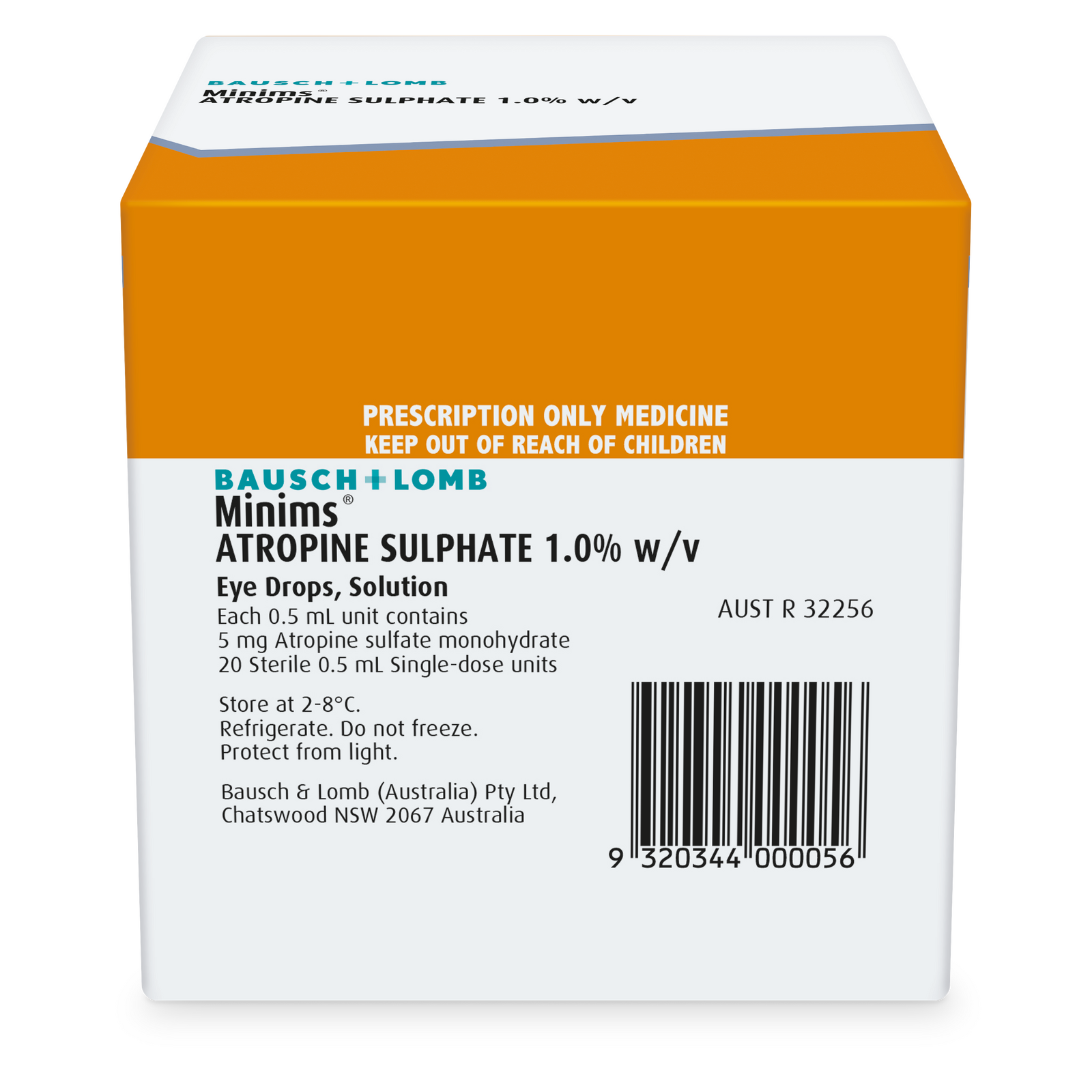
Minims Atropine Eye Drops are indicated to produce mydriasis and cycloplegia.
Dosage and Administration
Adults (including the elderly): One drop to be instilled into the eye, or as required. Each Minims Atropine Eye Drops unit
should be discarded after a single use.
Contraindications
Minims Atropine Eye Drops are contraindicated in patients with hypersensitivity to any of the components of the
preparation. Minims Atropine Eye Drops are contraindicated in the presence of angle closure glaucoma or where angle
closure glaucoma is suspected.
Precautions
For topical ophthalmic use only. Not for injection. Atropine eye drops are not recommended in infants aged less than 3
months. Atropine eye drops should be used with caution in children, in elderly patients and when the ambient
temperature is high. Atropine eye drops should not be used in cases of confirmed narrow-angle glaucoma or where
latent narrow angle glaucoma is suspected. Atropine eye drops should not be used in cases of keratoconus or synechiae
between the iris and lens, unless the clinical benefit outweighs the risk.
Interactions
Anticholinergics, antiglaucoma agents, antimyasthenics, potassium citrate, potassium supplements, carbachol,
physostigmine, pilocarpine and central nervous system depression producing medications.
Pregnancy & Lactation
Atropine sulphate may be systemically absorbed after ocular administration; however, significant effects on the foetus
have not been reported. Nevertheless, caution is advised. Systemically absorbed atropine sulphate is distributed into
breast milk in very small amounts. It may cause adverse effects, such as rapid pulse, fever, or dry skin, in breastfeeding
infants of mothers using ophthalmic atropine.
Ability to Drive & Use Machines
Minims Atropine Eye Drops may cause transient blurring of vision on instillation. Patients should be advised not to drive
or operate hazardous machinery until vision is clear.
Adverse Effects
Local adverse effects include blurred vision, local irritation, allergic conjunctivitis or blepharoconjunctivitis, contact
dermatitis, eczematous dermatitis, increased intraocular pressure and precipitation of narrow angle glaucoma. Systemic
reactions may occur after ocular instillation, particularly in children or elderly patients. Symptoms of systemic toxicity
include dryness of the mouth and skin, flushing, fever, rash, thirst, tachycardia, irritability, hyperactivity, ataxia, confusion,
somnolence, hallucinations and delirium.
Storage
Store at 2°C to 8°C. Protect from light.
| SKU | SN14 |
| Brand | Bausch & Lomb |
| Category | Diagnostic Drugs & Strips, Mydriatics & Cycloplegics, Mydriatics & Cycloplegics, Minims |
| Unit Of Measure | 20's |
 Brochure.pdf
Your doctor will normally instil the drops into your eyes for you. The usual dose is one drop instilled into the eye, or as required.
Wash your hands well before you use the drops. Remove the cap (or twist off the tip of the unit if you are using a Minims® single-dose unit). Tilt your head back a little and pull the lower lid of your eye out to form a pocket. Hold the unit upside down near to your eye. Try not to touch your eye as you do this. Apply enough pressure to the container to release one drop into your eye. Only use a second drop if the first drop missed going into your eye. Close your eye for a minute or two, and press gently on the side of your nose where the corner of your eye meets your nose. This helps to stop the drop from draining away and keeps it in your eye.
Things you should do:
- Tell your doctor if you become pregnant or decide to breastfeed while using Minims Atropine.
Things you should not do:
- Do not let children handle the eye drops.
- Atropine will cause blurred vision which may last for some time. Make sure you can see clearly again before you drive and before you use tools or machines.
- If you are using any other eye drops or ointments, leave about ten minutes between applying each one.
Systemic absorption may be reduced by compressing the lacrimal sac at the medial canthus for a minute during and following the instillation of the drops. (This blocks the passage of the drops via the naso-lacrimal duct to the wide absorptive area of the nasal and pharyngeal mucosa.)
Side effects: The skin around the eyes can be sore. Your eyes can be swollen, red and itchy. This is more likely to happen if the drops are used more than once.
Each Minims unit should be discarded after a single use. The eye drops do not contain any preservatives.
For topical ophthalmic application only. The solution should not be injected.
Storage: Store at 2 to 8 degrees Celsius. Refrigerate. Do not freeze. Protect from light.
Active ingredient: Atropine sulfate monohydrate 1.0% w/v (10 mg/mL).
No preservatives (sterile single-use unit).
Other ingredients: hydrochloric acid (for pH adjustment) and purified water.
Each Minims unit contains approximately 0.5 mL eye drops solution of atropine sulphate 1% w/v (5 mg).
AUST R 32256.
SKU - SN01
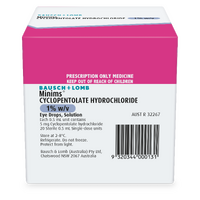
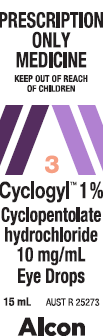
Cyclopentolate Hydrochloride 1.0% Minims
Minims Cyclopentolate eye drops are indicated to produce mydriasis and cycloplegia.
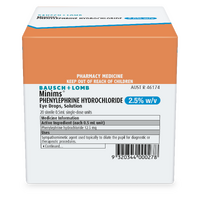
SKU - SN24
Phenylephrine Hydrochloride 2.5% Minims
Phenylephrine is a directly acting sympathomimetic agent used topically in the eye as a mydriatic. Minims Phenylephrine eye drops are indicated to dilate the pupil for diagnostic or therapeutic procedures.
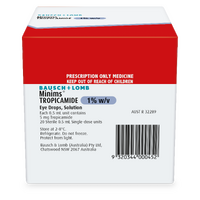
SKU - SN04
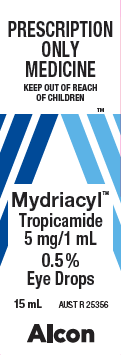
Minims Tropicamide eye drops is one of the antimuscarinics used to produce mydriasis and cycloplegia.
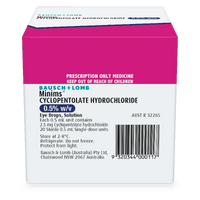
SKU - SN25
Cyclopentolate Hydrochloride 0.5% Minims
Minims Cyclopentolate eye drops are indicated to produce mydriasis and cycloplegia.
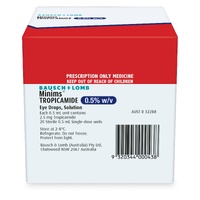
SKU - SN03
Minims Tropicamide eye drops is one of the antimuscarinics used to produce mydriasis and cycloplegia.
SKU - SN02
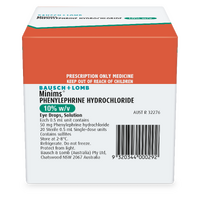
Phenylephrine Hydrochloride 10% Minims
Phenylephrine is a directly acting sympathomimetic agent used topically in the eye as a mydriatic. Minims Phenylephrine eye drops are indicated to dilate the pupil for diagnostic or therapeutic procedures.