

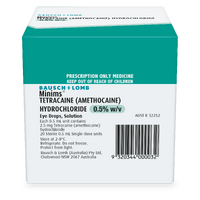
SKU - SN08
Amethocaine Hydrochloride 0.5% Minims
Minims Tetracaine (Amethocaine) eye drops are indicated to produce local anaesthesia in the eye.
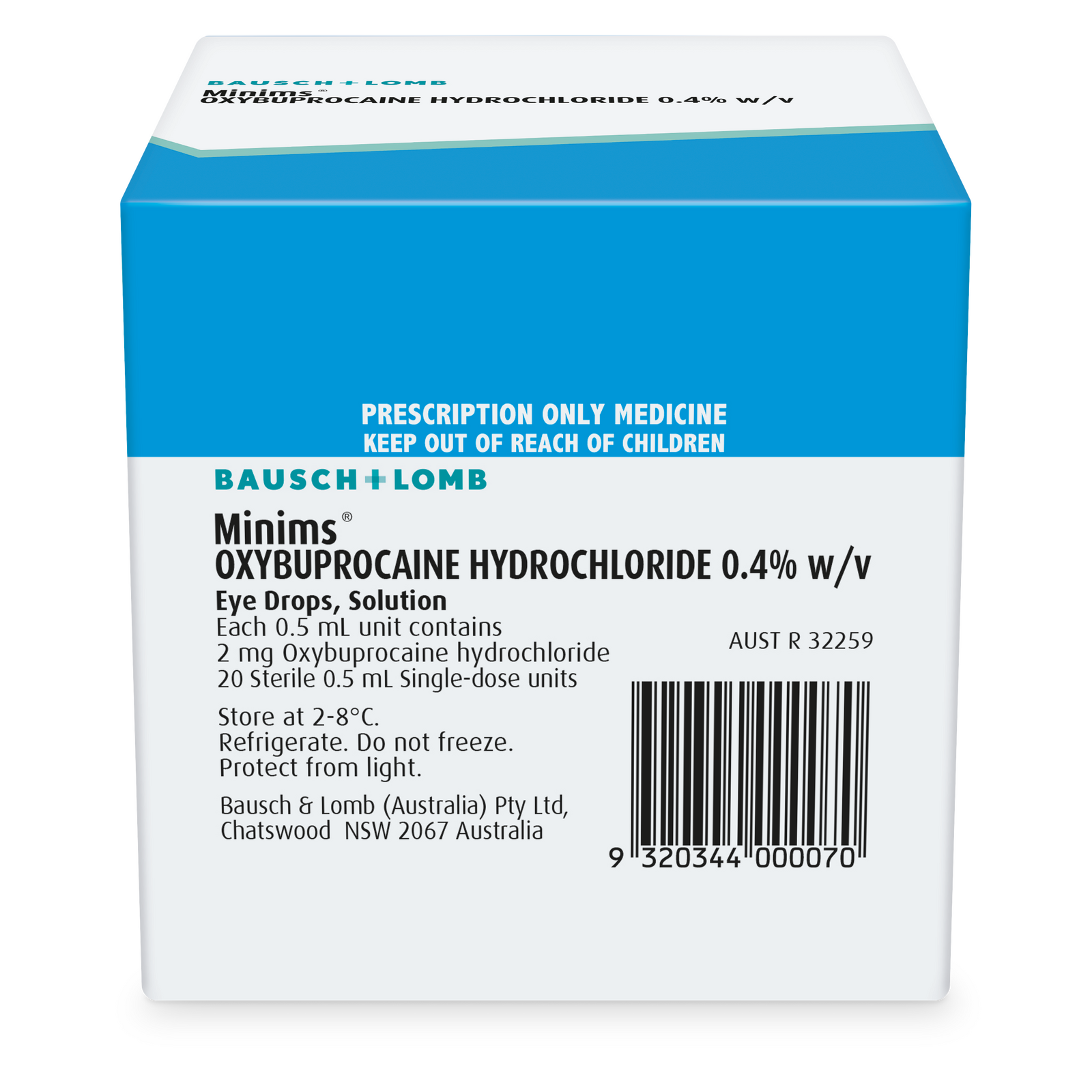
SKU - SN10
To produce local anaesthesia in the eye for short ophthalmological procedures.
Dosage and Administration
Patients must not instil the drug. To be given only by a clinician.
One drop of 0.4% oxybuprocaine solution instilled into each eye has been shown sufficient for tonometry after one
minute. Addition of a further drop after 90 seconds provides adequate anaesthesia for fitting of a contact lens. To obtain a
deeper anaesthetic effect, further drops may be instilled at intervals of no less than 90 seconds. For most procedures one
to two drops is sufficient, however for removal of foreign bodies or minor surgery, three to six drops is suggested. One
drop a minute for 10 minutes was shown to provide adequate anaesthesia for patients undergoing pterygium surgery.
Each Minims Oxybuprocaine eye drops unit should be discarded after a single use.
Contraindications
Known hypersensitivity to anaesthetics in this group and concomitant infection of the eye.
Precautions
For topical ophthalmic use only. Not for injection. The anaesthetized eye should be protected from dust and bacterial
contamination. Oxybuprocaine has the potential to cause severe corneal damage and morbidity. Oxybuprocaine eye
drops should not be used for prolonged periods. Frequent or chronic use may result in severe corneal damage, keratitis
and acquired tolerance.
Interactions
Metabolism of local anaesthetics derived from esters may be inhibited by anticholinesterases and thus prolong the effects
of oxybuprocaine. Ester-type local anaesthetics may competitively enhance the neuromuscular blocking action of
suxamethonium.
Pregnancy & Lactation
Safety for use in pregnancy and lactation has not been established, therefore, use only when it is considered essential by
a physician.
Ability to Drive & Use Machines
May cause transient blurring of vision. Patients should be advised not to drive or operate hazardous machinery until their
vision is clear.
Adverse Effects
Instillation of drops commonly causes a transient stinging or burning sensation. Frequent use can result in stromal
infiltration, oedema, keratitis, peripheral corneal ring formation, acquired tolerance and damage to corneal endothelial
cells. Reductions in tear film stability, fibrinous iritis and sinus bradycardia have been documented. CNS reactions are
very rare in therapeutic doses. Occasional nausea, vomiting and dysphagia have been observed during therapy.
Storage
Store at 2 – 8°C. Protect from light.
| SKU | SN10 |
| Brand | Bausch & Lomb |
| Category | Diagnostic Drugs & Strips, Anaesthetics, Anaesthetics, Minims |
| Unit Of Measure | 20's |
 Brochure.pdf
Minims Oxybuprocaine Hydrochloride Eye Drops are only to be used by your doctor during eye procedures.
The doctor will instil the drops into your eye(s) before starting a procedure to numb the eye. The number of times your doctor will put drops in your eye(s) will depend on the type and length of the procedure to be performed.
Things you should do:
- Protect your numb eye from dust particles, which could cause infections.
- The anaesthetised eye should be protected from dust and bacterial contamination.
Things you should not do:
- Do not touch or rub your eye while your eye is numb.
- This medicine has been developed for use in the eye only. It should not be swallowed or injected.
- Prolonged use of topical ophthalmic local anaesthetics has been associated with severe keratitis and permanent corneal opacification and scarring.
Each Minims unit should be discarded after a single use. The eye drops do not contain any preservatives.
For topical ophthalmic application only. The solution should not be injected.
Storage: Store at 2 to 8 degrees Celsius. Refrigerate. Do not freeze. Protect from light.
Active ingredient: Oxybuprocaine hydrochloride 0.4% w/v (4 mg/mL).
(Also known as Benoxinate Hydrochloride 0.4%.)
No preservatives (sterile single-use unit).
Each Minims unit contains approximately 0.5 mL of solution.
AUST R 32259.
SKU - SN08
Amethocaine Hydrochloride 0.5% Minims
Minims Tetracaine (Amethocaine) eye drops are indicated to produce local anaesthesia in the eye.
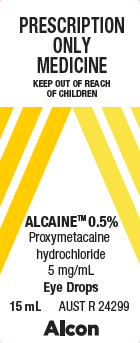
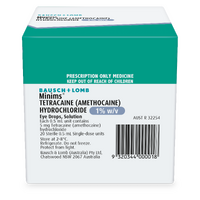
SKU - SN09
Amethocaine Hydrochloride 1.0% Minims
Minims Tetracaine (Amethocaine) eye drops are indicated to produce local anaesthesia in the eye.