SKU - SN02
Phenylephrine is a directly acting sympathomimetic agent used topically in the eye as a mydriatic. Minims Phenylephrine eye drops are indicated to dilate the pupil for diagnostic or therapeutic procedures.
Dosage and Administration
The use of a drop of topical anaesthetic a few minutes before instillation of Minims Phenylephrine eye drops is
recommended to prevent stinging.
Adults: Instil one drop topically to each eye. If necessary, this dose may be repeated once only, at least one hour after the
first drop.
Children and the elderly: Instil one drop of the 2.5% solution topically to the eye. It is not usually necessary to exceed this
dose.
Each Minims Phenylephrine eye drops unit should be discarded after a single use.
Contraindications
Minims Phenylephrine eye drops are contraindicated in patients with hypersensitivity to any of the components of the
preparation. Minims Phenylephrine eye drops 10% is contraindicated in children and the elderly because of the increased
risk of systemic toxicity.
Precautions
For topical ophthalmic use only. Not for injection. To reduce the risk of precipitating an attack of narrow angle
glaucoma the anterior chamber angle should be evaluated before use. Exercise caution in children, the elderly, patients
with cardiac disease, hypertension, aneurysms, diabetes, tachycardia, hyperthyroidism, generalised arteriosclerosis,
long-standing bronchial asthma, closed angle glaucoma (unless previously treated with iridectomy) and narrow angle
prone to glaucoma precipitated by mydriatics. Use with caution in patients on monoamine oxidase inhibitors, tricyclic
antidepressants, anti-hypertensive agents, halothane, cardiac glycosides and quinidine.
Interactions
Although negligible phenylephrine passes into the bloodstream after ocular instillation, drug interactions are
nevertheless possible. Phenylephrine may interact with monoamine oxidase inhibitors, tricyclic antidepressants, antihypertensive
agents, halothane, cardiac glycosides and quinidine.
Pregnancy & Lactation
Safety for use in pregnancy and lactation has not been established, therefore, use only when considered essential by the
physician.
Ability to Drive & Use Machines
May cause stinging and transient blurring of vision. Patients should be advised not to drive or operate hazardous
machinery until vision is clear.
Adverse Effects
Local effects include eye pain and stinging on instillation, temporary blurred vision, photophobia, conjunctival allergy,
reactive hyperaemia, transient punctuate keratitis, lacrimation, corneal oedema, pigmented aqueous floaters, rebound
miosis and rebound conjunctival vasoconstriction. Systemic effects include palpitations, tachycardia, extrasystoles, cardiac
arrhythmias, hypertension, headache, subarachnoid haemorrhage, reflex bradycardia, blanching of the skin, trembling or
tremors and increased perspiration. Serious cardiovascular reactions including significant hypertension, aneurisms,
coronary artery spasm, ventricular arrhythmias and myocardial infarctions have occurred following topical use of
phenylephrine. These sometimes fatal reactions have usually occurred in patients with pre-existing cardiovascular disease.
Storage
Store at 2 – 8°C. Protect from light.
| SKU | SN02 |
| Brand | Bausch & Lomb |
| Category | Diagnostic Drugs & Strips, Mydriatics & Cycloplegics, Mydriatics & Cycloplegics, Minims |
| Unit Of Measure | 20's |
 Brochure.pdf
Your doctor will normally instil the drops into your eyes for you.
Apply one drop to each eye. If necessary, this dose may be repeated once only, at least one hour after the first drop.
For adults, the usual dose is one drop instilled into the eye(s) and this may be repeated once if necessary, at least one hour after the first drop.
The use of a drop of topical anaesthetic a few minutes before instillation of phenylephrine is recommended to prevent stinging.
Important: Phenylephrine 10% is contraindicated in children aged below 12 years and is not recommended in children aged 12 to 18 years. The use of phenylephrine 10% solution is contraindicated in elderly patients because of the increased risks of systemic toxicity.
Caution: Use with caution in patients with cardiac disease, hypertension, aneurysms, thyrotoxicosis, long-standing insulin dependent diabetes mellitus, and tachycardia.
To minimise systemic absorption, compress the lacrimal sac at the medial canthus for one minute during and after the instillation of the drops.
Side effects: May cause stinging and temporarily blurred vision. Warn patients not to drive or operate hazardous machinery until vision is clear. Some people find bright light uncomfortable for a few hours after instillation.
Things you should not do:
- Do not put Minims Phenylephrine into your eye(s) while you are wearing soft contact lenses (remove before instillation, replace after 15 minutes).
Each Minims unit should be discarded after a single use. The eye drops do not contain any preservatives.
For topical ophthalmic application only. The solution should not be injected.
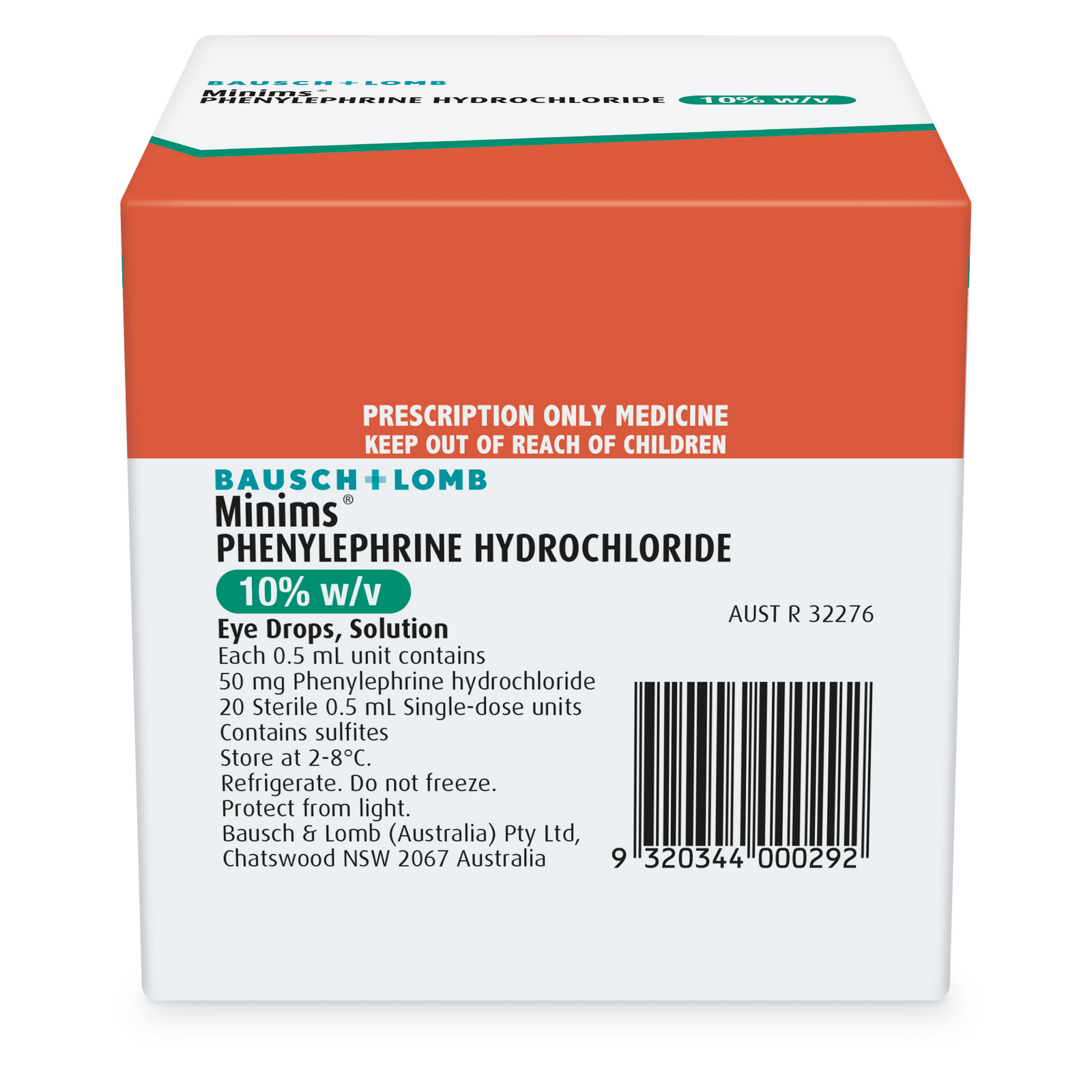
Storage: Store at 2 to 8 degrees Celsius. Refrigerate. Do not freeze. Protect from light.
Active ingredient: Phenylephrine hydrochloride 10% w/v (100 mg/mL).
No preservatives (sterile single-use unit).
Each Minims unit contains approximately 0.5 mL of solution.
AUST R 32276.
SKU - SN01
Cyclopentolate Hydrochloride 1.0% Minims
Minims Cyclopentolate eye drops are indicated to produce mydriasis and cycloplegia.
SKU - SN24
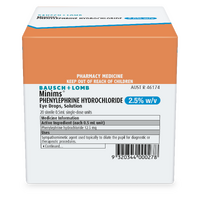
Phenylephrine Hydrochloride 2.5% Minims
Phenylephrine is a directly acting sympathomimetic agent used topically in the eye as a mydriatic. Minims Phenylephrine eye drops are indicated to dilate the pupil for diagnostic or therapeutic procedures.
SKU - SN04
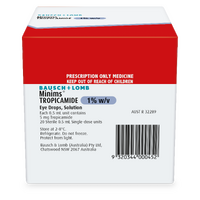
Minims Tropicamide eye drops is one of the antimuscarinics used to produce mydriasis and cycloplegia.
SKU - SN25
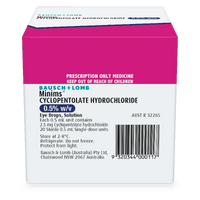
Cyclopentolate Hydrochloride 0.5% Minims
Minims Cyclopentolate eye drops are indicated to produce mydriasis and cycloplegia.
SKU - SN03
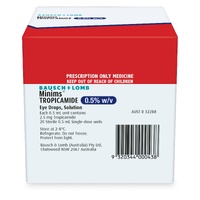
Minims Tropicamide eye drops is one of the antimuscarinics used to produce mydriasis and cycloplegia.
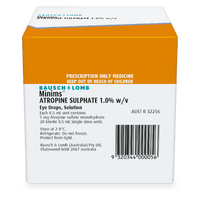
SKU - SN14
Minims Atropine Eye Drops are indicated to produce mydriasis and cycloplegia.