

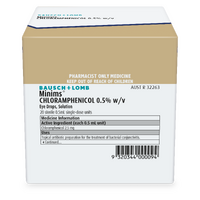
SKU - SN13
For the treatment of bacterial conjunctivitis. For use under medical supervision only in the treatment of other superficial ocular infections caused by chloramphenicol-sensitive organisms.
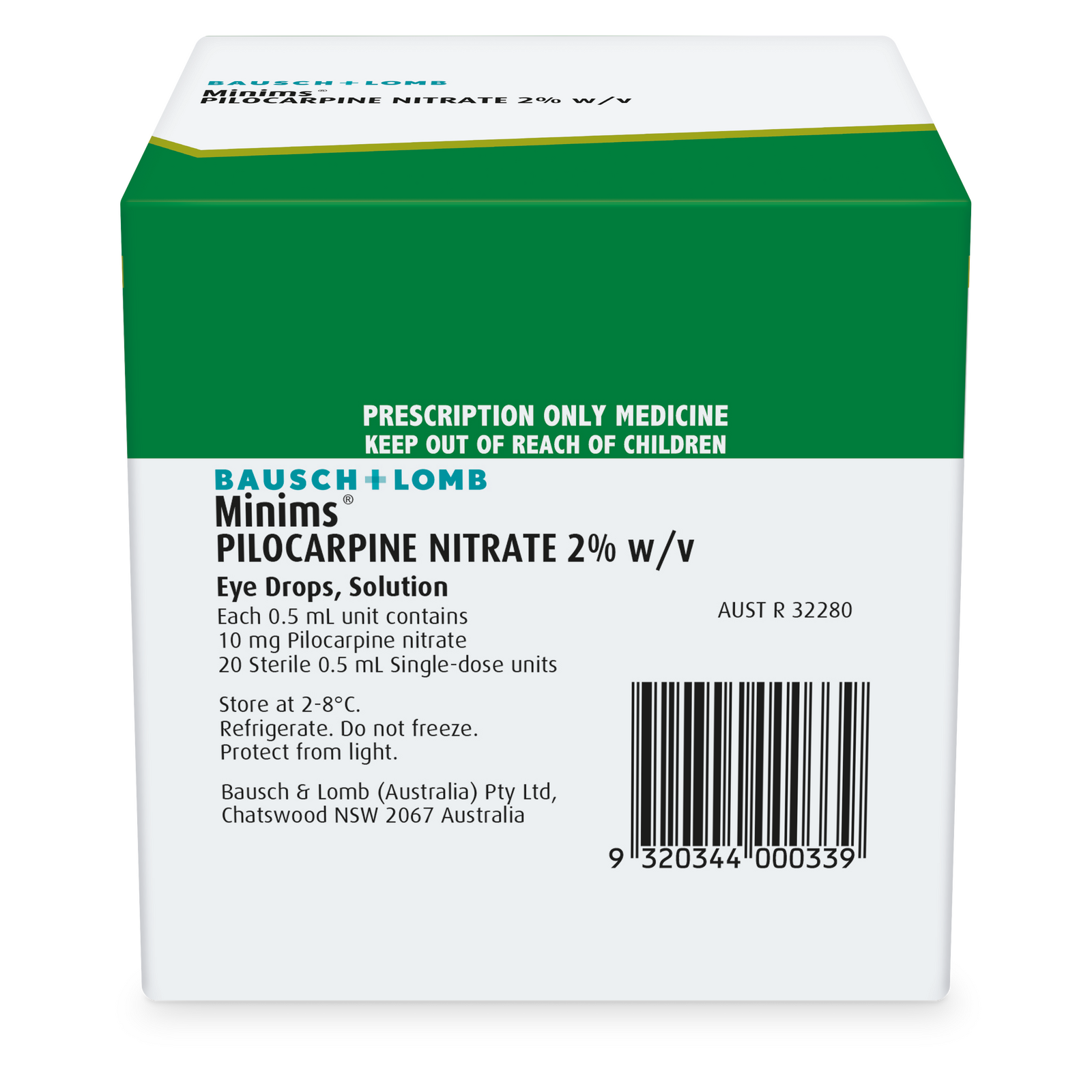
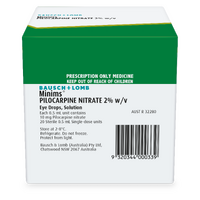
SKU - SN06
Chronic glaucoma and a miotic for reversing the effects of the weaker mydriatics and in emergency treatment of glaucoma.
Dosage and Administration
Adults (including the elderly) and children: To induce miosis, 1 or 2 drops should be used. In cases of emergency
treatment of acute narrow angle glaucoma, 1 drop should be used every 5 minutes until miosis is achieved. Each
Minims Pilocarpine eye drops unit should be discarded after a single use.
Contraindications
Conditions where pupillary constriction is undesirable such as acute iritis, pupillary block glaucoma, acute uveitis,
anterior uveitis, iridocyclitis, acute iritis and some forms of secondary glaucoma. Hypersensitivity to pilocarpine
nitrate. Retinal detachment; past history of retinal detachment or conditions that predispose to retinal detachment.
Use of soft contact lenses when administering pilocarpine eye drops.
Precautions
For topical ophthalmic use only. Not for injection. Retinal detachments have been caused in susceptible individuals
and those with pre-existing retinal disease; therefore, fundus examination is advised in all patients prior to the initiation
of therapy. If possible, treatment with long-acting miotics should be discontinued before surgery on the eye as there is
an increased risk of hyphaemia. Pilocarpine induces spasm of the ciliate muscle which may last up to two hours.
Topical miotics may precipitate bronchospasm in susceptible patients. Use with caution on an inflamed eye. Caution is
advised in patients with acute heart failure, bradycardia, coronary artery disease, bronchial asthma and other chronic
respiratory diseases, peptic ulceration, hypertension, urinary tract obstruction, Parkinson's disease and corneal
abrasions. Caution is advised in paediatric patients with primary congenital glaucoma.
Interactions
Belladonna alkaloids or cyclopentolate used ophthalmically may interfere with the miotic effects of pilocarpine and
may have their own mydriatic effects reduced.
Pregnancy & Lactation
Safety for use in pregnancy and lactation has not been established, therefore, use only when considered essential by
the physician.
Ability to Drive & Use Machines
Pilocarpine may cause transient blurring of vision on instillation and cause difficulty with dark adaptation. Patients
should be warned not to drive or operate hazardous machinery unless vision is clear.
Adverse Effects
Local effects include ciliary spasm, ocular pain and irritation, blurred vision, lachrymation, myopia, browache and
conjunctival vascular block. Lens opacities have occurred following prolonged use. Systemic adverse effects are rare.
Storage
Store at 2°C to 8°C. Protect from light.
| SKU | SN06 |
| Brand | Bausch & Lomb |
| Category | Diagnostic Drugs & Strips, Diagnostic Misc, Diagnostic Misc, Minims |
| Unit Of Measure | 20's |
 Brochure.pdf
Used as a miotic, for reversing the action of weaker mydriatics and in the emergency treatment of glaucoma.
Your doctor or eye specialist will normally instil the drops into your eyes for you. Single-use Minims units, to be used for one application then discarded.
For chronic non-congestive glaucoma: instil into the affected eye(s) as directed by your doctor or eye specialist.
For reversing mydriasis: 1 drop instilled into the eye after the diagnostic procedure is complete.
Things you should not do:
- Do not drive, operate machinery or do any other hazardous activities while using Minims Pilocarpine.
- Do not put Minims Pilocarpine into your eye(s) while you are wearing soft contact lenses.
Each Minims unit should be discarded after a single use. The eye drops do not contain any preservatives.
For topical ophthalmic application only. The solution should not be injected.
Storage: Store at 2 to 8 degrees Celsius. Refrigerate. Do not freeze. Protect from light.
Active ingredient: Pilocarpine nitrate 2% w/v (20 mg/mL).
No preservatives (sterile single-use unit).
Each Minims unit contains approximately 0.5 mL of solution.
AUST R 32280.
SKU - SN13
For the treatment of bacterial conjunctivitis. For use under medical supervision only in the treatment of other superficial ocular infections caused by chloramphenicol-sensitive organisms.
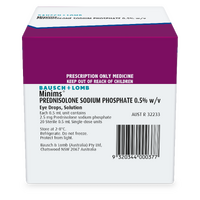
SKU - SN19
Prednisolone Sodium Phosphate 0.5% Eye Drops Minims
Minims Prednisolone Eye Drops are indicated for non-infected inflammatory conditions of the eye.